Edit study information
Edit general information
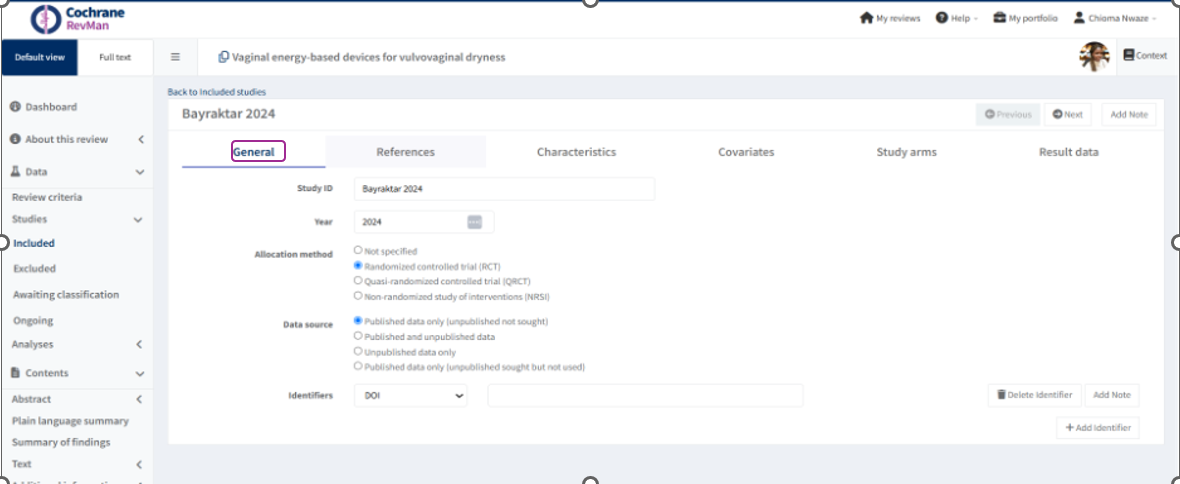
On the ‘General’ tab, you can edit the Study ID, year of publication, allocation method, the data source and add identifiers.
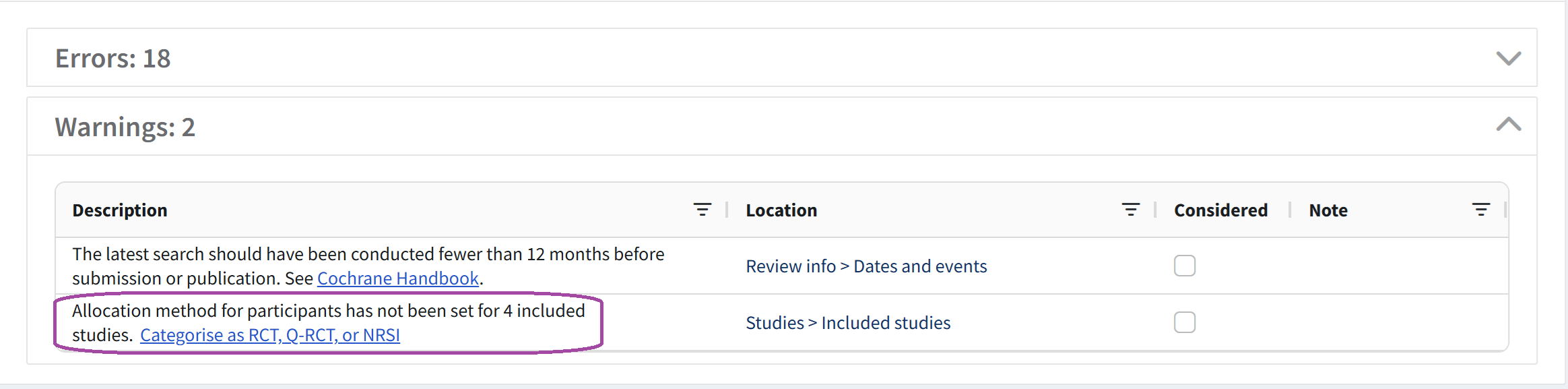
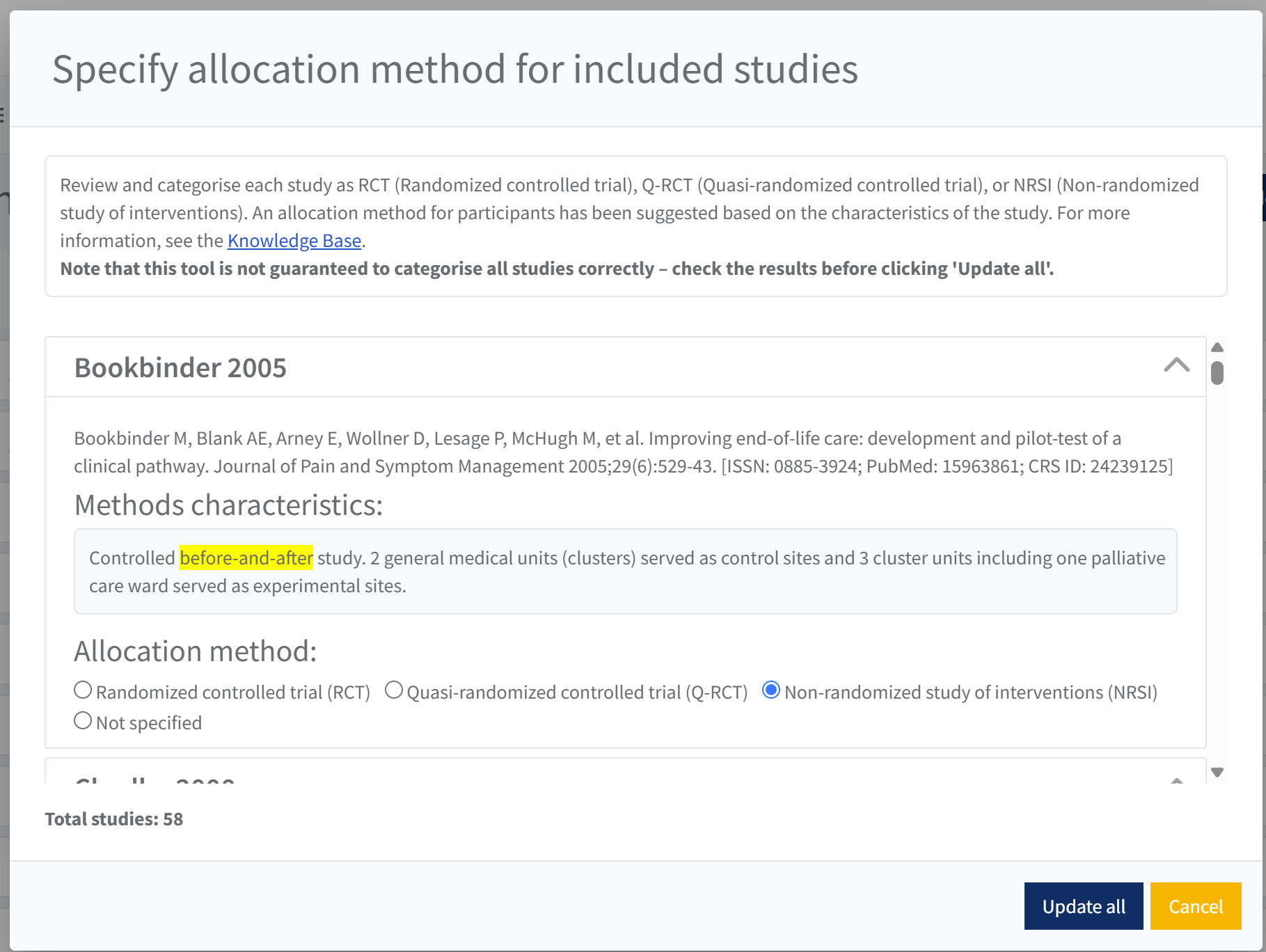
If the allocation method is set to 'Not specified' to any of the included studies, you will be able to open a help tool that suggests when studies are NRSIs from the validation report.
Identified NRSIs show on the top of the list and identified search terms are highlighed in yellow.
Review all selctions and then click 'Update all'.
The help tool tries to identify NRSIs using the following search string:
(t.text ilike '%observational%'
or t.text ilike '%non-randomi_ed%'
or t.text ilike '%before-and-after%'
or t.text ilike '%before and after%'
or t.text ilike '%retrospective cohort study%'
or t.text ilike '%nrsi%'
or t.text ilike '%historically controlled%')
The tool was evaluated compared to a hand screened sample of Cochrane reviews published in 2025 (n=278) with the following results:
| Metric | Result |
|---|---|
| True positives | 21 |
| False positives | 11 |
| False negatives | 7 |
| Precision | 65.6% |
| Recall | 75.0% |
| F1 score | 70.0% |
| Accuracy | 93.5% |
Note that the help tool will struggle in particular with accurately categorizing studies where the study-characteristics also describe a related study for example:
"Initial run-in period (observational - participants received conventional therapies) to ensure that participants entered the randomised period only if they insufficiently improved their muscle strength with conventional therapies.".
Edit the reference
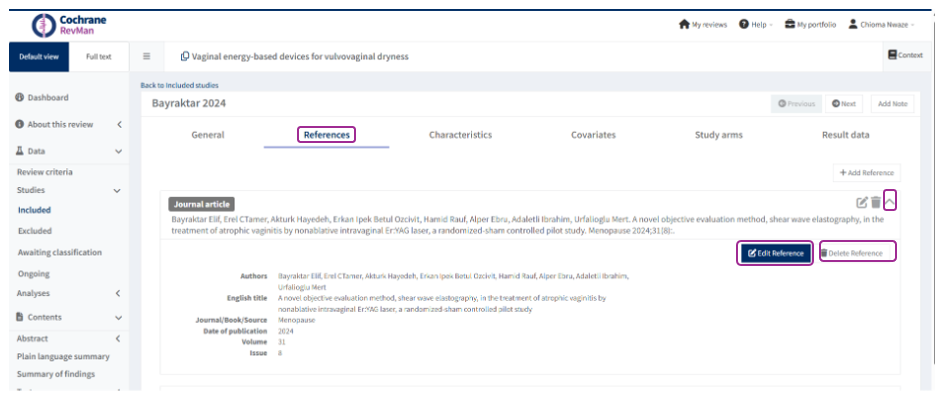
On the 'References' tab, click on the arrow icon to reveal the reference, then click on the 'Edit' button. If you have more than one report of an included study, see How to mark a report as a primary reference. You can remove the reference by clicking the 'Delete' button.
Edit study characteristics
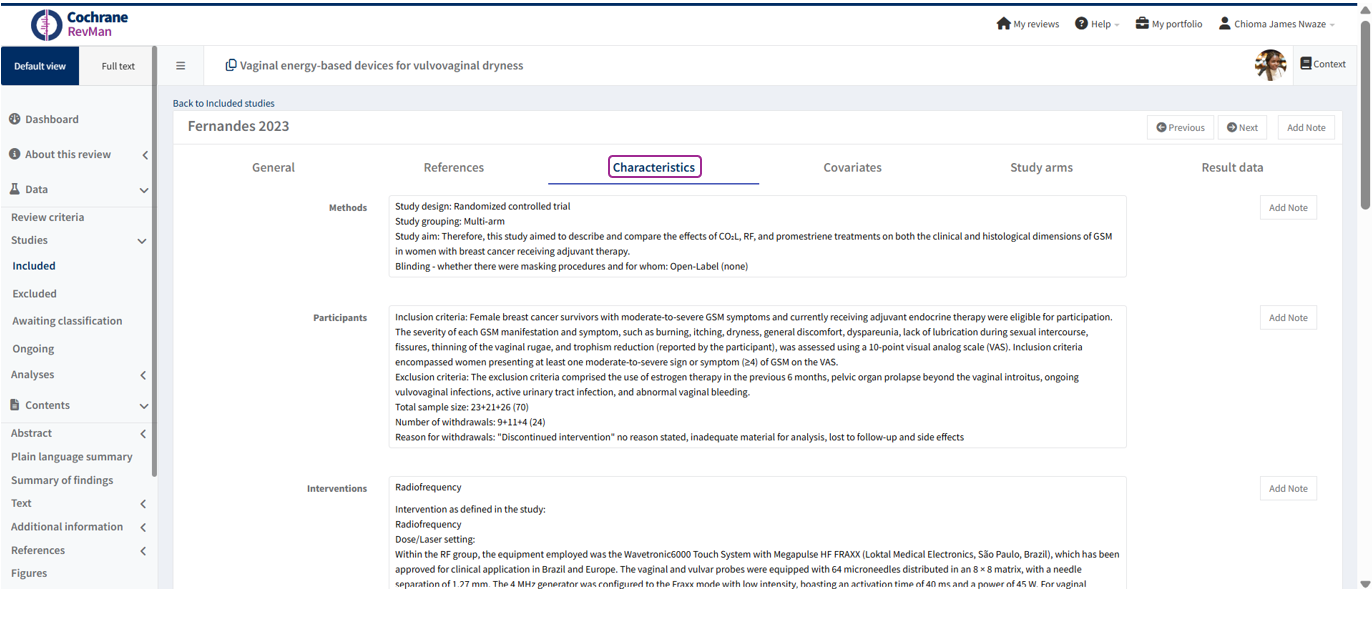
In the ‘Characteristics’ tab you can edit the description of the characteristics of the included study.
Paste study characteristics
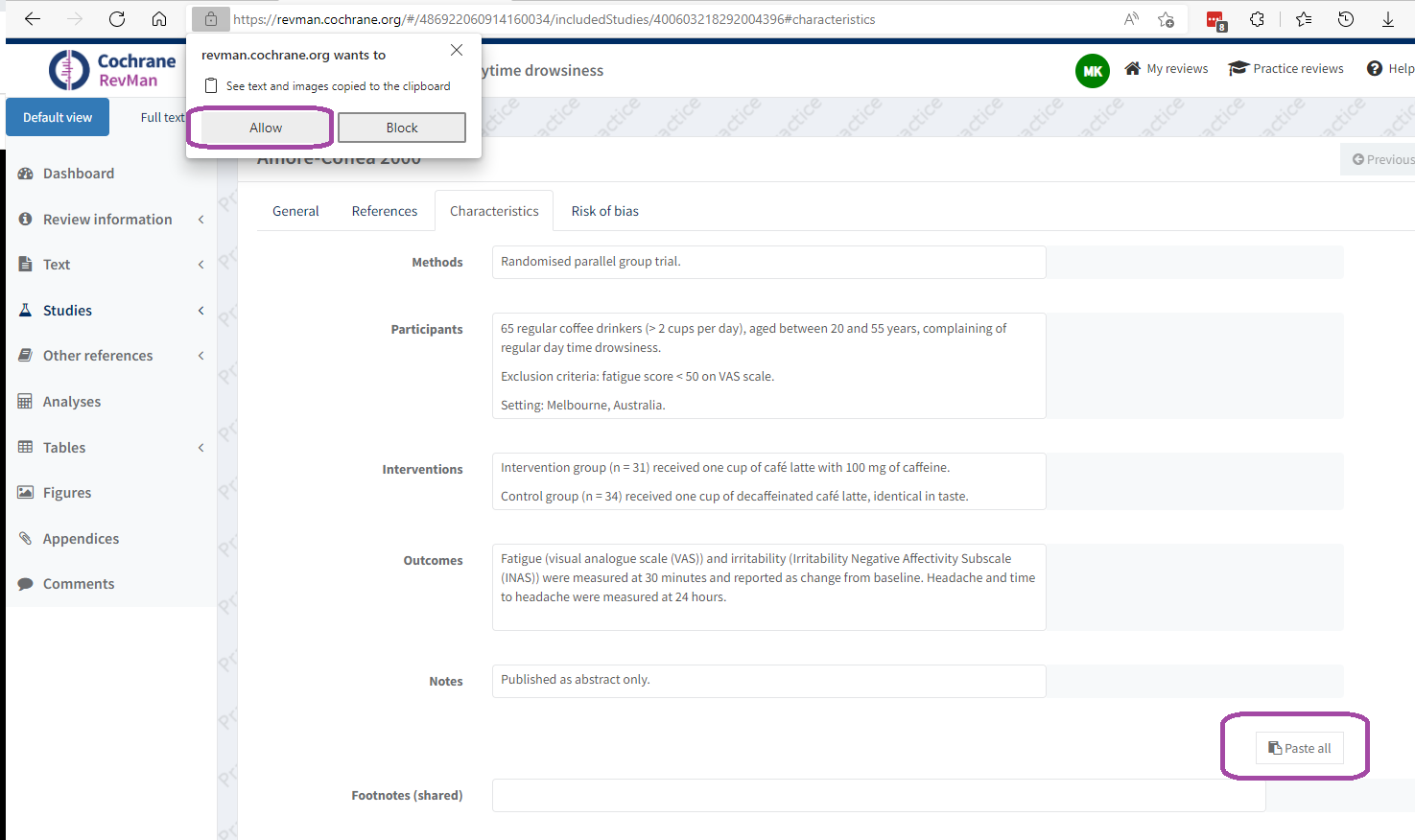
In the ‘Characteristics’ tab you can paste the description of the characteristics of the included study that you have copied from a table on an external source. The external source could e.g. be a webpage, a Word document or a spreadsheet.
Please ensure you tag a version on the Review Dashboard before editing any characteristics, as pasting will override any text already in the text boxes.
Copy the table (horizontal or vertical) from an external source and click the 'Paste all' button at the bottom of the ‘Characteristics’ tab. Your browser may ask you to allow RevMan to access your clipboard. Please click 'Allow' to use this feature.
Please note the formatting that will be copied:
- Word: paragraphs italics, bold, underline and links are supported
- Spreadsheets: links and paragraphs are supported
- Web page: depend on tags used (italics, bold, underline and links are supported)
Footnotes to Characteristics of Studies tables
Add or edit items
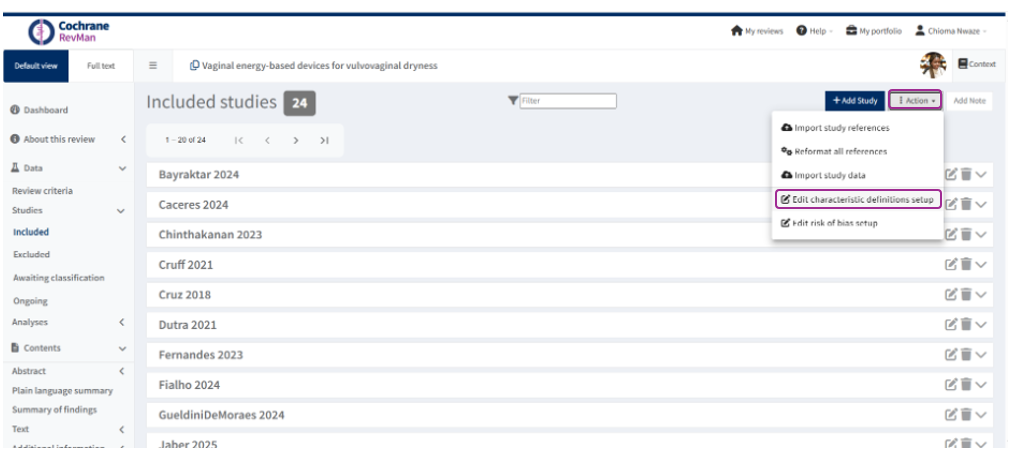
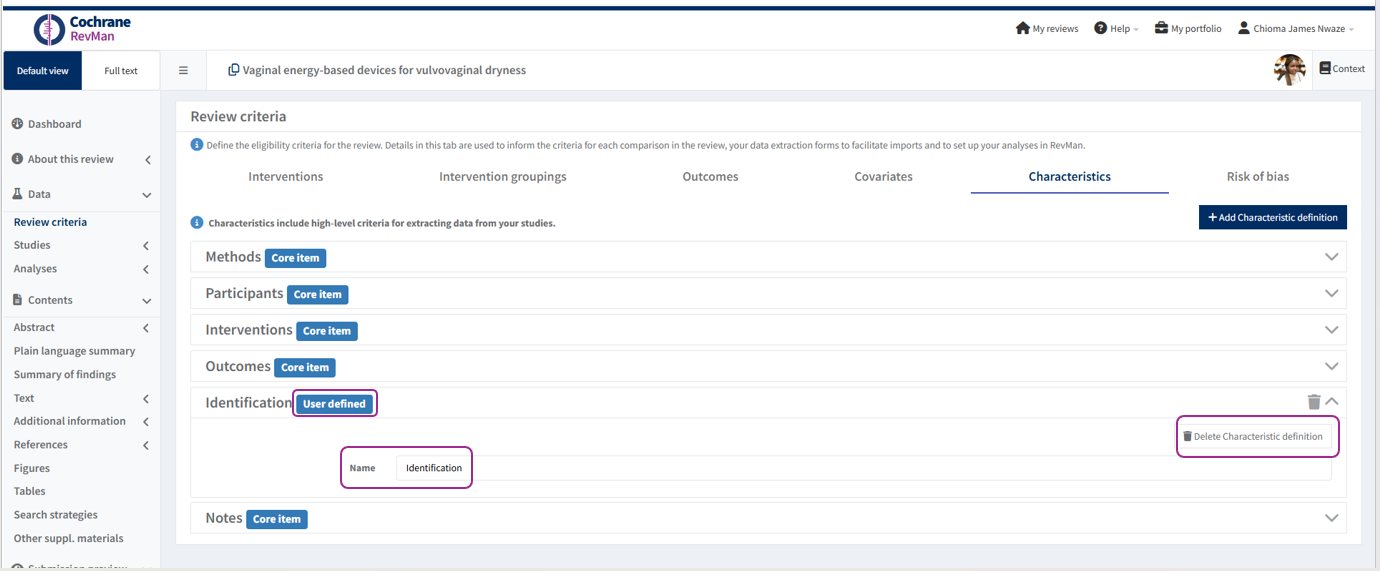
If you want to add items, go back to Review criteria and click on 'Add Characteristic definition’ on the top right. You can also add and edit items, by going back to Included studies and click on the 'Action' button on the top right, then click ‘Edit Characteristic definitions setup’. This lists ‘Core items’ and ‘User-defined’ items. ‘Core items’ cannot be renamed or deleted. Up to 3 ‘User-defined’ items can be added, renamed, or deleted. Note that all these items are global, i.e. appear in all included studies.
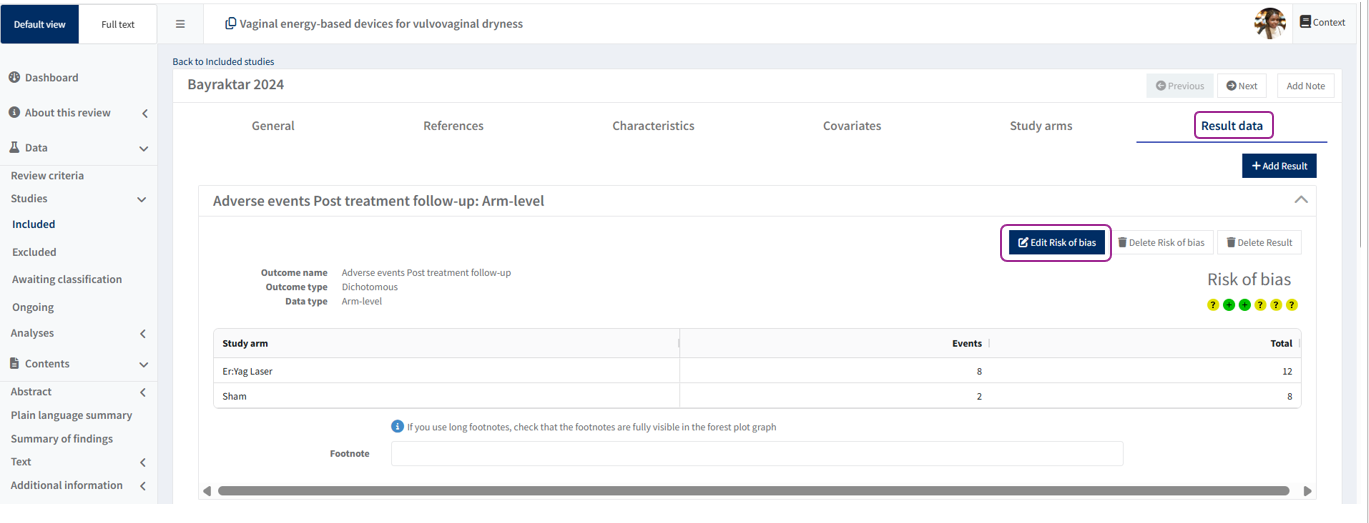
Edit risk of bias assessment
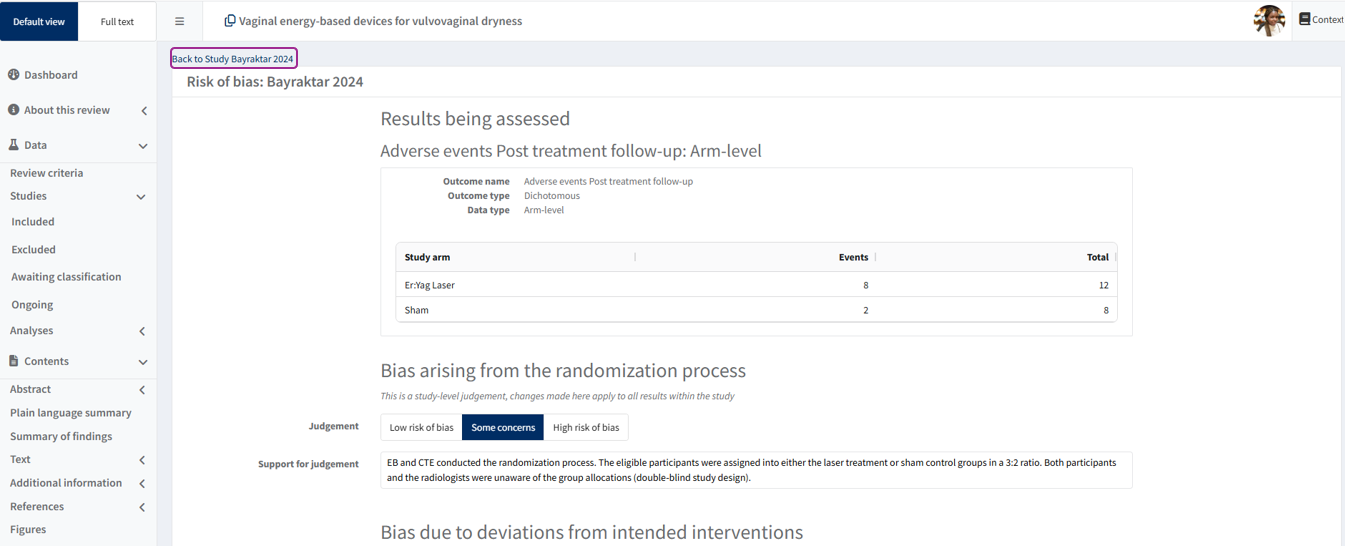
To edit the risk of bias assessment, click on the 'Result data' tab. Locate the relevant result and select Edit Risk of bias- for more detail see Risk of Bias 1. If you want to go back to the Included studies list, click on the 'Back to included studies' link above the study ID.